Download PDF The Encyclopedia of Healing Foods, by Michael T. Murray, JOSEPH PIZZORNO
Why should be this publication The Encyclopedia Of Healing Foods, By Michael T. Murray, JOSEPH PIZZORNO to review? You will never ever get the knowledge and experience without obtaining by yourself there or trying by yourself to do it. Hence, reviewing this publication The Encyclopedia Of Healing Foods, By Michael T. Murray, JOSEPH PIZZORNO is needed. You can be great and also appropriate sufficient to get how crucial is reviewing this The Encyclopedia Of Healing Foods, By Michael T. Murray, JOSEPH PIZZORNO Also you always read by commitment, you could sustain yourself to have reading book behavior. It will certainly be so helpful as well as enjoyable then.
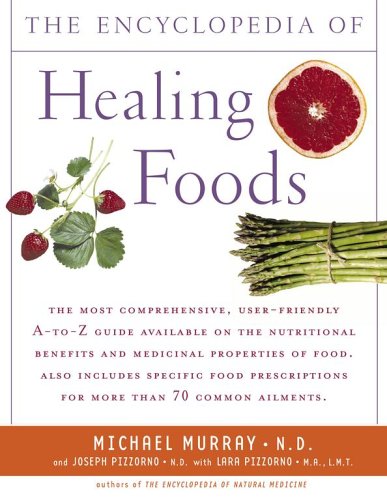
The Encyclopedia of Healing Foods, by Michael T. Murray, JOSEPH PIZZORNO

Download PDF The Encyclopedia of Healing Foods, by Michael T. Murray, JOSEPH PIZZORNO
The Encyclopedia Of Healing Foods, By Michael T. Murray, JOSEPH PIZZORNO. Learning to have reading behavior is like discovering how to try for consuming something that you actually do not really want. It will require more times to help. In addition, it will certainly likewise little force to offer the food to your mouth and also swallow it. Well, as checking out a publication The Encyclopedia Of Healing Foods, By Michael T. Murray, JOSEPH PIZZORNO, in some cases, if you should read something for your new tasks, you will really feel so dizzy of it. Even it is a publication like The Encyclopedia Of Healing Foods, By Michael T. Murray, JOSEPH PIZZORNO; it will certainly make you feel so bad.
When some individuals considering you while checking out The Encyclopedia Of Healing Foods, By Michael T. Murray, JOSEPH PIZZORNO, you may really feel so pleased. However, instead of other people feels you need to instil in yourself that you are reading The Encyclopedia Of Healing Foods, By Michael T. Murray, JOSEPH PIZZORNO not because of that reasons. Reading this The Encyclopedia Of Healing Foods, By Michael T. Murray, JOSEPH PIZZORNO will provide you more than individuals admire. It will guide to recognize greater than the people looking at you. Already, there are several sources to understanding, reviewing a book The Encyclopedia Of Healing Foods, By Michael T. Murray, JOSEPH PIZZORNO still comes to be the first choice as a fantastic means.
Why should be reading The Encyclopedia Of Healing Foods, By Michael T. Murray, JOSEPH PIZZORNO Again, it will depend on how you feel as well as think about it. It is certainly that people of the advantage to take when reading this The Encyclopedia Of Healing Foods, By Michael T. Murray, JOSEPH PIZZORNO; you can take a lot more lessons directly. Also you have not undertaken it in your life; you could obtain the experience by checking out The Encyclopedia Of Healing Foods, By Michael T. Murray, JOSEPH PIZZORNO And currently, we will introduce you with the online book The Encyclopedia Of Healing Foods, By Michael T. Murray, JOSEPH PIZZORNO in this internet site.
What kind of publication The Encyclopedia Of Healing Foods, By Michael T. Murray, JOSEPH PIZZORNO you will prefer to? Now, you will not take the published publication. It is your time to get soft file publication The Encyclopedia Of Healing Foods, By Michael T. Murray, JOSEPH PIZZORNO rather the printed records. You can appreciate this soft data The Encyclopedia Of Healing Foods, By Michael T. Murray, JOSEPH PIZZORNO in whenever you expect. Even it remains in expected location as the other do, you could review guide The Encyclopedia Of Healing Foods, By Michael T. Murray, JOSEPH PIZZORNO in your gadget. Or if you really want more, you can keep reading your computer or laptop computer to get complete screen leading. Juts discover it here by downloading the soft file The Encyclopedia Of Healing Foods, By Michael T. Murray, JOSEPH PIZZORNO in web link web page.
JUST WHAT IS A HEALTHY DIET?
WHAT DOES THE BODY NEED TO STAY STRONG AND GET WELL?
From the bestselling authors of The Encyclopedia of Healing Foods comes this convenient condensed edition -- a practical, portable guide to the nutritional benefits and healing properties of virtually everything we eat.
Studies have shown that diet plays a major role in both provoking and preventing a wide range of diseases. Here, leading authorities on nutrition and wellness make sense of the research in an easy-to-use A-to-Z guide to eating your way to good health.
Boasting the most effective natural remedies for everyday aches and pains, as well as potent protection against serious diseases like Alzheimer's and cancer, The Condensed Encyclopedia of Healing Foods is an essential reference for anyone looking to make healthy eating a lifelong habit.
- Sales Rank: #773954 in Books
- Brand: ATRIA
- Published on: 2005-09-20
- Ingredients: Example Ingredients
- Original language: English
- Number of items: 1
- Dimensions: 9.25" h x 2.03" w x 7.38" l,
- Binding: Hardcover
- 912 pages
- Used Book in Good Condition
About the Author
Michael T. Murray, N.D., is widely regarded as one of the world?s leading authorities on natural medicine. He has been featured on numerous television programs, including 20/20 and Dateline. He lives in Washington.
Dr. Joseph Pizzorno is cofounder of Bastyr University, the first accredited multidisciplinary university of natural medicine in the United States.
Lara Pizzorno, M.A., L.M.T., is a health writer and medical editor with more than twenty years of experience.
Excerpt. © Reprinted by permission. All rights reserved.
Chapter One: Human Nutrition: An Evolutionary Perspective
In order to answer the question "What is a healthy diet?," it is important to first take a look at what our body is designed for. Is the human body designed to eat plant foods, animal foods, or both? Respectively, are we herbivores, carnivores, or omnivores?
While the human gastrointestinal tract is capable of digesting both plant and animal foods, there are indications that we evolved to digest primarily plant foods. Specifically, our teeth are composed of twenty molars, which are perfect for crushing and grinding plant foods, along with eight front incisors, which are well suited for biting into fruits and vegetables. Only our front four canine teeth are designed for meat eating, and our jaws swing both vertically to tear and laterally to crush, while carnivores' jaws swing only vertically. Additional evidence that supports the human body's preference for plant foods is the long length of the human intestinal tract. Carnivores typically have a short bowel, while herbivores have a bowel length proportionally comparable to humans'.
To answer the question of what humans should eat, many researchers look to other primates, such as chimpanzees, monkeys, and gorillas. These nonhuman wild primates are omnivores. They are also often described as herbivores and opportunistic carnivores in that although they eat mainly fruits and vegetables, they may also eat small animals, lizards, and eggs if given the opportunity. For example, the gorilla and the orangutan eat only 1 percent and 2 percent of animal foods as a percentage of total calories, respectively. The remainder of their diet is derived from plant foods. Since humans are between the weight of the gorilla and orangutan, it has been suggested that humans are designed to eat around 1.5 percent of their diet in the form of animal foods. However, most Americans derive well over 50 percent of their calories from animal foods.
Since wild primates fill up on wild fruit and other highly nutritious plant foods, those weighing one tenth the amount of a typical human ingest nearly ten times the level of vitamin C and much higher amounts of many other vitamins and minerals (see Table 1.1). How is this possible? One reason is that the cultivated fruit in an American supermarket is far different from the wild fruit of the primate's diet, having a slightly higher protein content and a higher content of certain essential vitamins and minerals. Cultivated fruit tends to be higher in sugars and, while very tasty to humans, it is not nearly as nutritious. In fact, it raises blood sugar levels much more quickly than its wild counterparts do.
There are other differences in the wild primate diet that are also important to highlight, such as a higher ratio of alpha-linolenic acid -- the essential omega-3 fatty acid -- to linoleic acid -- the essential omega-6 fatty acid. A higher ratio of omega-3 fatty acid decreases the likelihood of the development of inflammatory and chronic diseases as well as their severity. Finally, the wild primate diet is very high in fiber, while the average American diet is not. A high-fiber diet protects against heart disease and many types of cancer.
Determining what diet humans are best suited for may not be as simple as looking at the diet of wild primates. Humans have some significant structural and physiological differences compared to apes. The key difference may be our larger, more metabolically active brains. In fact, it has been theorized that a shift in dietary intake to more animal foods may have produced the stimulus for human brain growth. The shift itself was probably the result of limited food availability, which forced early humans to hunt grazing mammals such as antelope and gazelle. Archaeological data support this association -- humans' brains started to grow and become more developed at about the same time evidence shows an increase of animal bones being butchered with stone tools at early villages.
While improved dietary quality alone cannot fully explain why human brains grew, it definitely appears to have played a critical role. With their bigger brains, early humans were able to engage in more complex social behavior, which led to improved foraging and hunting tactics, which, in turn, led to even higher quality food intake that fostered additional brain evolution.
Data from anthropologists looking at evidence from hunter-gatherer cultures is providing much insight as to what humans are designed to eat. However, it is important to point out that these cultures were not entirely free to determine their diets. Instead, their diets were molded as a result of what was available to them. For example, the diet of the Inuit Eskimos is far different from that of the Australian Aborigines. Therefore, it may not be appropriate to answer the question "What should humans eat?" simply by looking at these studies alone.
Nonetheless, regardless of whether a hunter-gatherer community relied on animal or plant foods, the rate of diseases of civilization such as heart disease and cancers was extremely low.
How is this possible? One reason is that the meat our ancestors consumed was much different from the meat we find in the supermarket today. Domesticated animals have always had higher fat levels than their wild counterparts, but the desire for tender meat has driven the fat content of domesticated animals to 25 to 30 percent or higher compared to a fat content of less than 4 percent for free-living animals or wild game. In addition, the type of fat is considerably different. Domestic beef contains primarily saturated fats and virtually undetectable amounts of omega-3 fatty acids. In contrast, the fat of wild animals contains over five times more polyunsaturated fat per gram and has desirable amounts of beneficial omega-3 fatty acids (approximately 4 percent).
What conclusions can we draw from the evidence of the wild primate and hunter-gatherer diets about how we should eat today? Overwhelmingly, it appears that humans are better suited to a diet composed primarily of plant foods. This position is supported also by a tremendous amount of evidence showing that deviating from a predominantly plant-based diet is a major factor in the development of heart disease, cancer, strokes, arthritis, and many other chronic degenerative diseases. It is now the recommendation of many health and medical organizations that the human diet should focus primarily on plant-based foods, comprising vegetables, fruits, grains, legumes, nuts, and seeds.
The evidence supporting diet's role in chronic degenerative diseases is substantial. There are two basic facts linking the diet-disease connection:
1. A diet rich in plant foods is protective against many diseases that are extremely common in Western society.
2. A diet providing a low intake of plant foods is a causative factor in the development of these diseases and provides conditions under which other causative factors became more active.
The Pioneering Work of Denis Burkitt and Hugh Trowell
Much of the link between diet and chronic disease originated from the work of two medical pioneers: Denis Burkitt, M.D., and Hugh Trowell, M.D., editors of Western Diseases: Their Emergence and Prevention, first published in 1981. Although now extremely well recognized, the work of Burkitt and Trowell is actually a continuation of the landmark work of Weston A. Price, a dentist and author of Nutrition and Physical Degeneration. In the early 1900s, Dr. Price traveled the world observing changes in teeth and palate (orthodontic) structure as various cultures discarded traditional dietary practices in favor of a more "civilized" diet. Price was able to follow individuals as well as cultures over periods of twenty to forty years, and he carefully documented the onset of degenerative diseases as their diets changed.
Based on the extensive studies examining the rate of diseases in various populations (epidemiological data), including the groundbreaking work of Dr. Price and their own observations of primitive cultures, Burkitt and Trowell formulated the following sequence of events:
First stage: In cultures consuming a traditional diet consisting of whole, unprocessed foods, the rate of chronic diseases, such as heart disease, diabetes, and cancer is quite low.
Second stage: Commencing with eating a more "Western" diet, there is a sharp rise in the number of individuals with obesity and diabetes.
Third stage: As more and more people abandon their traditional diet, conditions that were once quite rare become extremely common.
Examples of these conditions include constipation, hemorrhoids, varicose veins, and appendicitis.
Fourth stage: Finally, with full Westernization of the diet, other chronic degenerative or potentially lethal diseases, including heart disease, cancer, osteoarthritis, rheumatoid arthritis, and gout, become extremely common.
Since the publication in Western Diseases of Burkitt and Trowell's pioneering research, a virtual landslide of data has continually verified the role of the Western diet as the key factor in virtually every chronic disease, but especially in obesity and diabetes. In 1984, the Food and Nutrition Board of the National Research Council established the Committee on Diet and Health to undertake a comprehensive analysis on diet and major chronic diseases. Their findings, as well as those of the U.S. surgeon general, the National Cancer Institute, and other highly respected medical groups brought to the forefront the need for Americans to change their eating habits to reduce their risk for chronic disease. Table 1.2 lists diseases with convincing links to a diet low in plant foods. Many of these now-common diseases were extremely rare before the twentieth century.
Trends in U.S. Food Consumption
During the twentieth century, food consumption patterns changed dramatically. Total dietary fat intake increased from 32 percent of calories in 1909 to 43 percent by the end of the century; carbohydrate intake dropped from 57 ...
Most helpful customer reviews
2 of 2 people found the following review helpful.
Excellent book to own on paper, to help anyone tailor their diet according to their needs, although it could do with an update
By Violaine Felten
This book is fabulous, although it would benefit from an update, as it lacks some new information on certain foods and doesn't mention some newly discovered foods, such as chia. Despite this, I've found it hugely helpful, both the introduction on how to put together the healthiest diet possible and the entries by type of food and by type of illness. It's well put together and includes interesting information on each food (history, where it's grown, etc.)
The main reasons why I'm not giving this encyclopedia 5 stars are as follows (editors take note...):
1) The Kindle edition is poorly designed, given that the index with hyperlinks is very general (you can skip to The Healing Power of Vegetables, but you can't skip within this section to Carrots, so you have to keep turning the pages until you get to the veg you' re looking for: same with the part on Diseases). So if you're looking to buy this book, I recommend you buy the paper edition, and not the Kindle one.
2) As mentioned above, it needs a re-editing especially in Part I, where I found some mistakes, typos and repetitions. Also, Part IV on Diseases could be more complete, given that in the section of healing foods, some foods are mentioned as having certain properties (for example, coconut helps eliminate the Helicobacter, but if you look in the section on diseases, this bacteria is not listed as a disease.)
3) Again, as mentioned above, it needs an update to include new information on given foods, and to include more foods.
1 of 1 people found the following review helpful.
Grab a case of hilighters
By NHMaria
I am absolutely in love with this book. There is so much great information in this book that you will need a case of hilighters. This book has helped me change my entire lifestyle. I've lost weight which is a bonus. I just wanted to learn how to eat healthier but the weight loss is nice. As you read this book, it makes you want to run to the produce section of your local grocery store. The book is way thicker than I expected but the amount of information in this book is well worth how thick it is.
2 of 2 people found the following review helpful.
A Must-Have of ANY household!
By ANNA S.
It's priceless informative source. It has so much information about foods, like foods that can help against cancer - like Broccoli, Red Peppers, etc. or "Wheat" information on ailment you might be having, like Celiac - which surprising gives details that even I might be having troubles with. Also, Anti-inflammatory foods like pineapple.
We kept checking out the local-library's copy until we bought our own through kindle. We were so impressed that checked at the local bookstore to send the paperback to other family members as presents but it was like back order or out-of-print - can't remember which and we were shocked to find that out. Everyone REALLY should have this to help for a problem health issue . You really have to have this Book on your bookshelf! :)
The Encyclopedia of Healing Foods, by Michael T. Murray, JOSEPH PIZZORNO PDF
The Encyclopedia of Healing Foods, by Michael T. Murray, JOSEPH PIZZORNO EPub
The Encyclopedia of Healing Foods, by Michael T. Murray, JOSEPH PIZZORNO Doc
The Encyclopedia of Healing Foods, by Michael T. Murray, JOSEPH PIZZORNO iBooks
The Encyclopedia of Healing Foods, by Michael T. Murray, JOSEPH PIZZORNO rtf
The Encyclopedia of Healing Foods, by Michael T. Murray, JOSEPH PIZZORNO Mobipocket
The Encyclopedia of Healing Foods, by Michael T. Murray, JOSEPH PIZZORNO Kindle

Tidak ada komentar:
Posting Komentar